Resume
My Works
Anticipating the transition that was soon to change the paradigm of national and cross-border electronic data transfers, and within his institutional brief, he stimulated the launch, amongst others, of two critical bodies : EVHA (European Ports Data processing association) and EASI (European Association of Shipping Informatics) (L’Avvisatore,). This work brought together the leading European ports and largest EU shipping operators into first-ever co-operative IT-based pilot projects. Up to that moment, although forms of electronic data exchange existed, communication between heterogeneous computer platforms was not available or demonstrated. The results of the projects were presented four years later, October 1983, – and under the auspices of the European Commission – at an international conference “Sea Technology Europe”. ( Sea Technology Europe, Modernizing the mariner, Full steam ahead for Europort systems)
Key speakers were Etienne Davignon, Vice-President of the EC, Michel Carpentier, Director-General of the ITTF, Robert Vleugels, Managing Director of the port of Antwerp and Alfredo Sarich. (Photo).
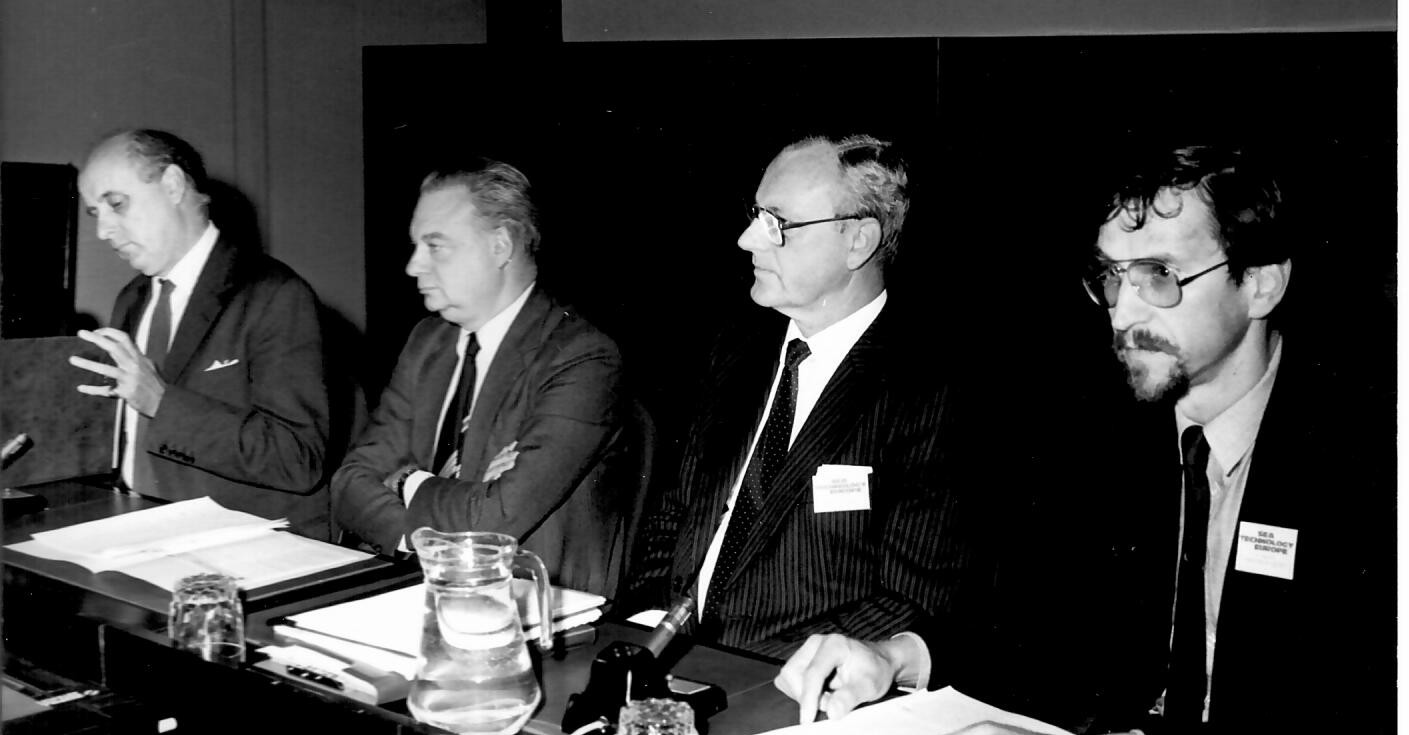
The meeting discussed foundational approaches, based on the European Community’s industrial policy pillars and the visionary end-user pilot projects that had tested and confirmed the feasibility of the complex exchange of electronic trade data between national and international industrial and commercial actors. Ample evidence of substantial economies of scale deriving from electronic data transfers between disparate computer systems at national and international level had emerged.
The meeting also agreed to reach out to the United Nations Economic Commission for Europe and to bring together national codes through the adoption of a common data interchange standard.
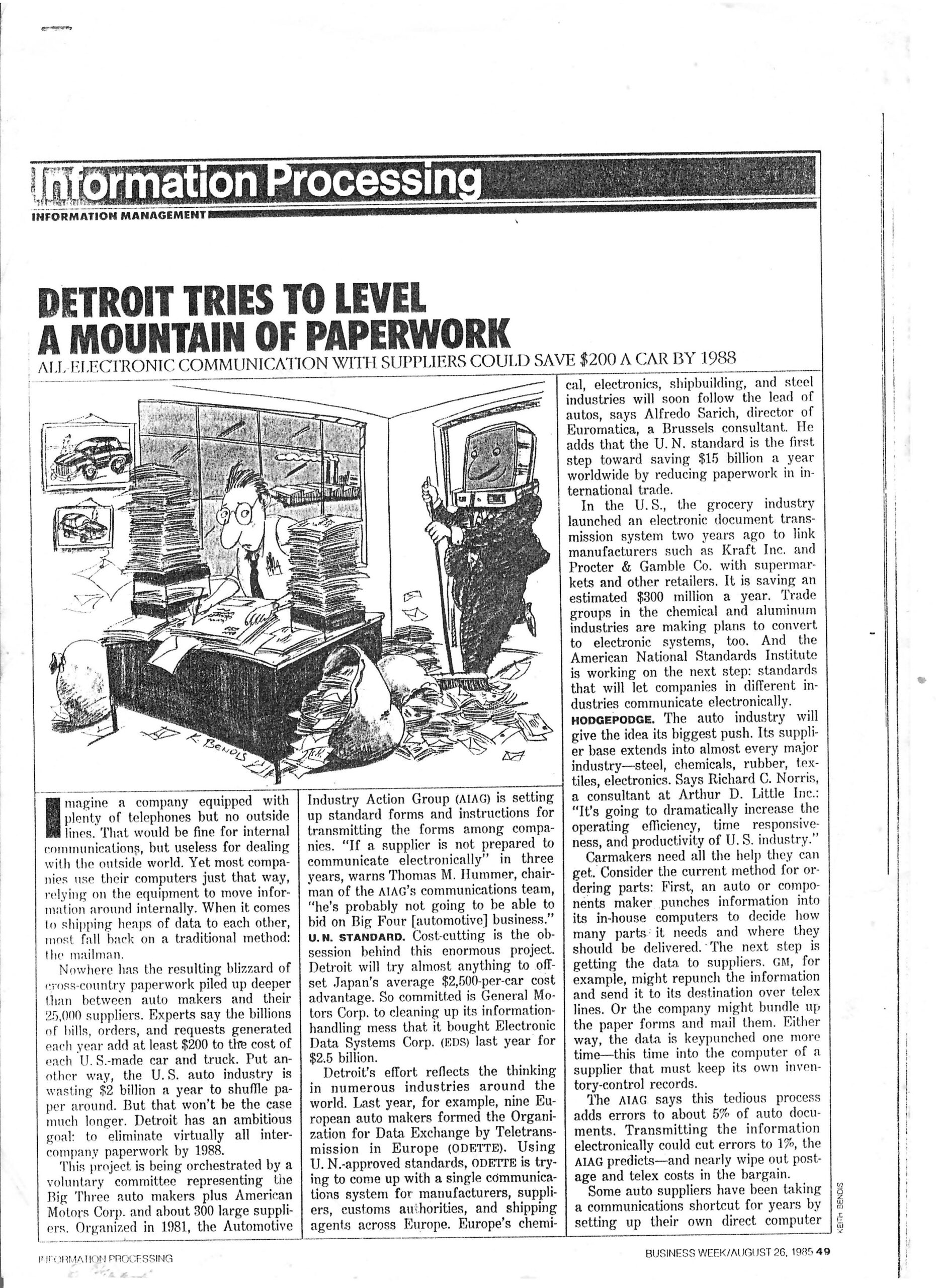
Main targets in commercial and industrial sectors (initially in transport, automotive, chemical, construction, shipping, insurance and re-insurance) were identified. This resulted in the formulation of notable consortiums such as ODETTE (automotive), CEFIC (chemicals), EDIFICE (construction) and others. Engagements and resulting financial benefits were discussed by Sarich on 31st August 1984 at a European Commission’s public press briefing where he famously stated that the adoption of a common standard and just-in-time processes would lead to savings of an average of 500 ECUs (now Euros) per manufactured vehicle. (Detroit1985, https://eresources.nlb.gov.sg : Common Links, Business Times, Singapore 05 September 1984) (*).
Electronic Trade Data Interchange (now EDI) and the international EDIFACT standard resulted from this early administrative, industrial and commercial co-operative work.
By the end of 1984 it had became evident that EDI would eventually encompass most industrial and commercial partners operating in the trading chain and that this would eventually drive to an almost paperless society. Sarich decided to kick start the process investing in the launch of the first-ever international conference on commerce and trade: Computer Aided Trade.
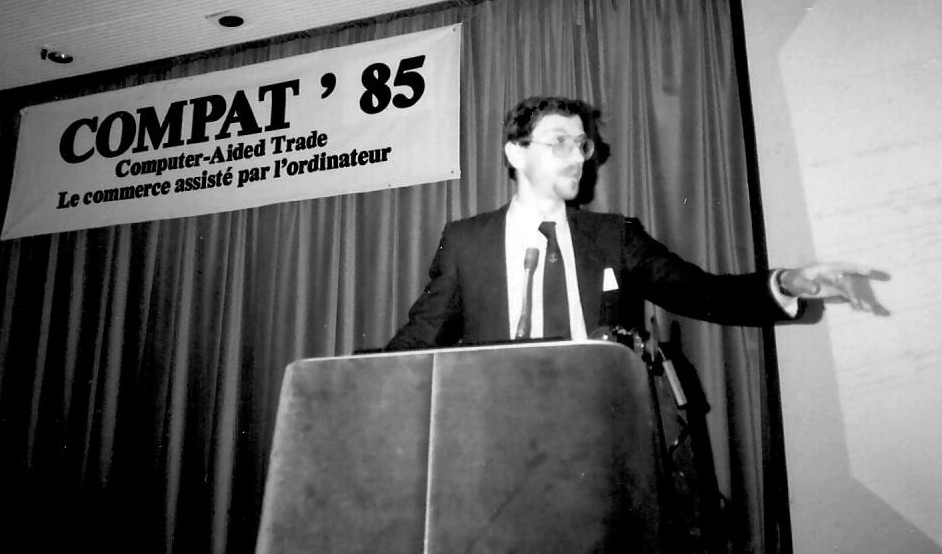
Compat 85 (Lloyds, TheTimes,) was run in London by Business Briefings on behalf of Euromatica SA, Sarich’s newly formed company, on 16/17 April 1985. The symposium brought together hundreds of high ranking directors, managers and trade specialists the world over. In his opening speech (Photo) Sarich gave, in five well-known and humorous transparencies the first-ever, fully comprehensive vision, of what was going to happen in the following hundred years (EC01, EC02, EC03, EC04, EC05 and WIKIMEDIA1, WIKIMEDIA2) amply anticipating and catapulting the technology into what is now better known as Electronic Commerce.
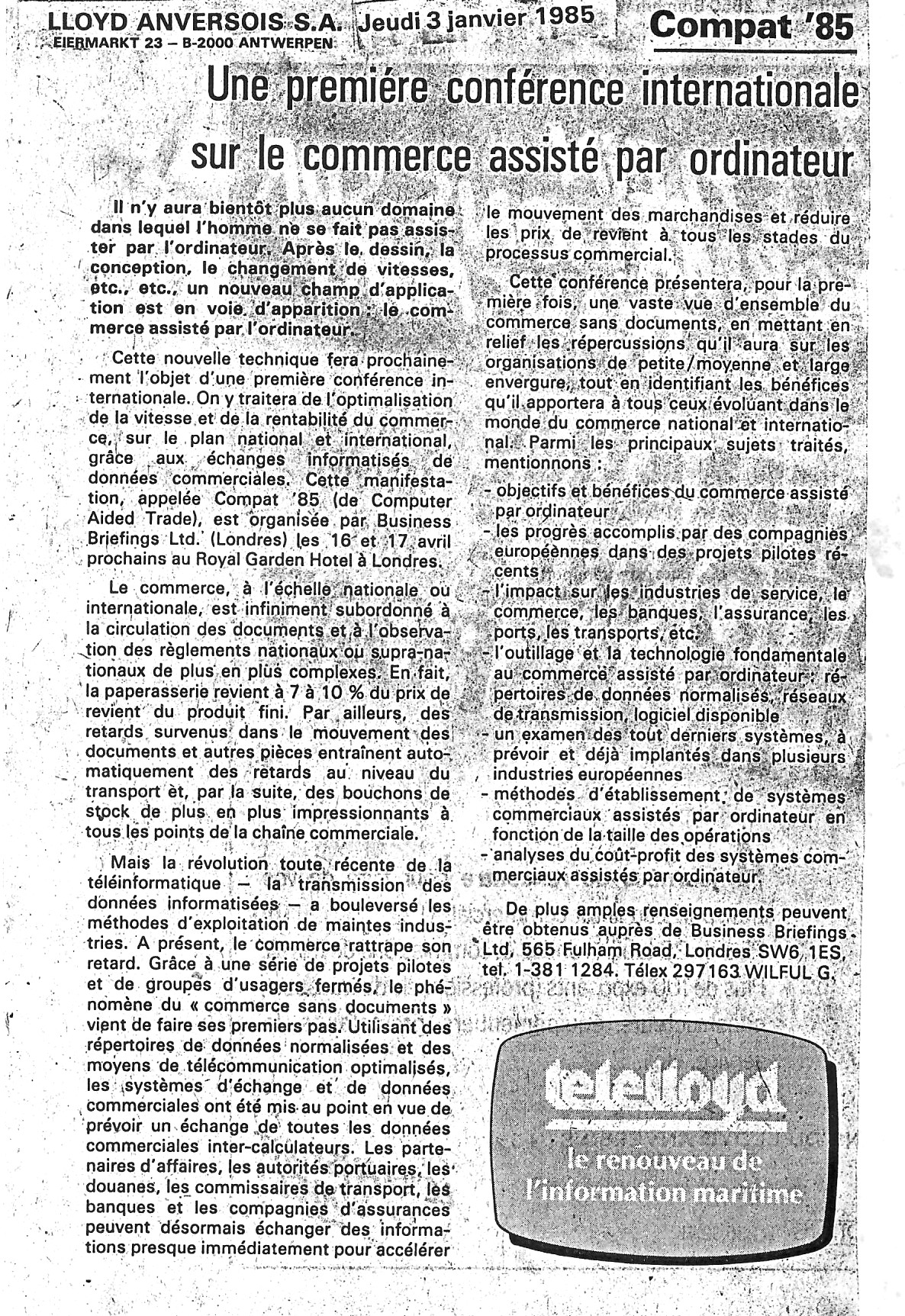
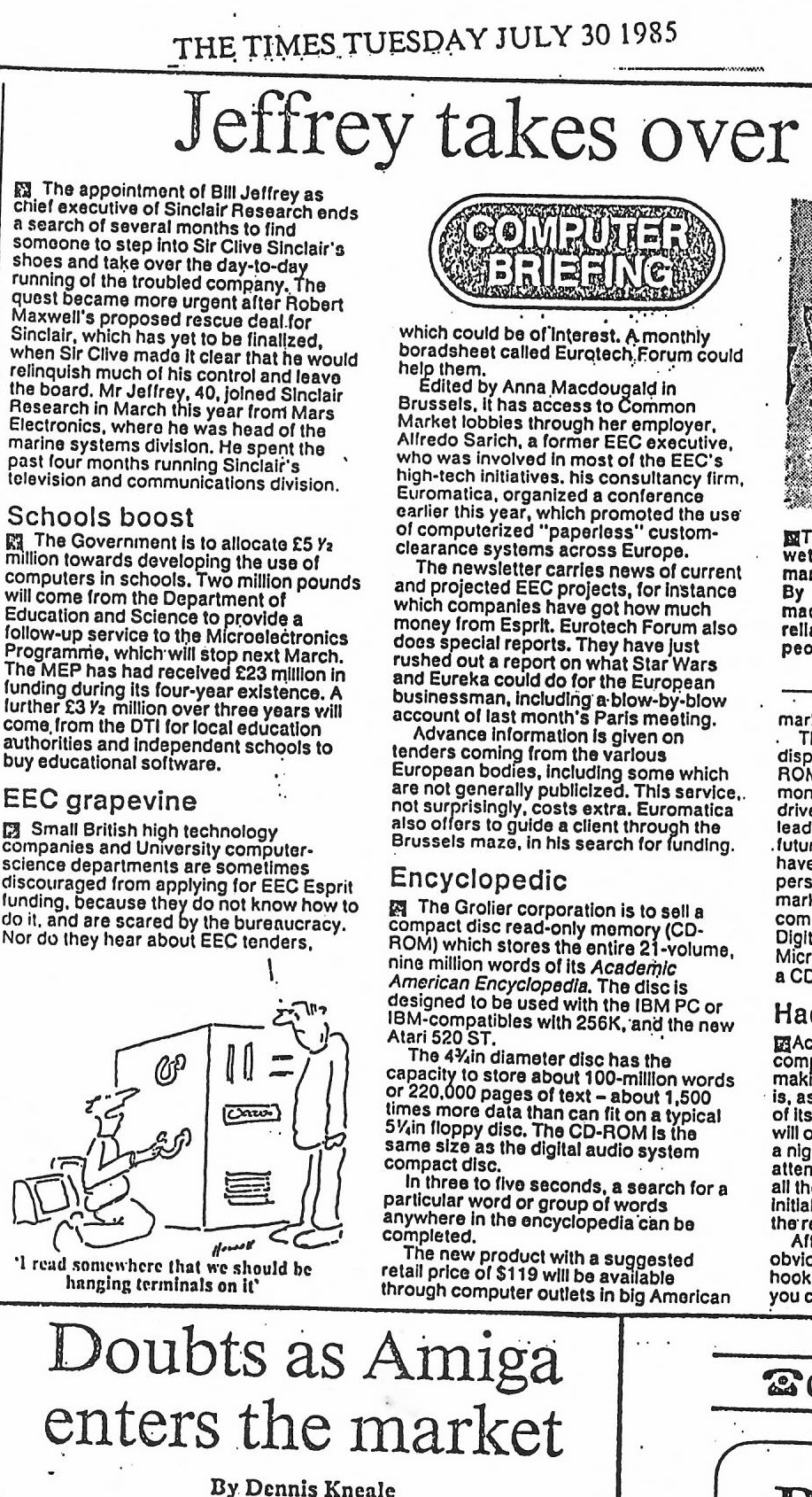
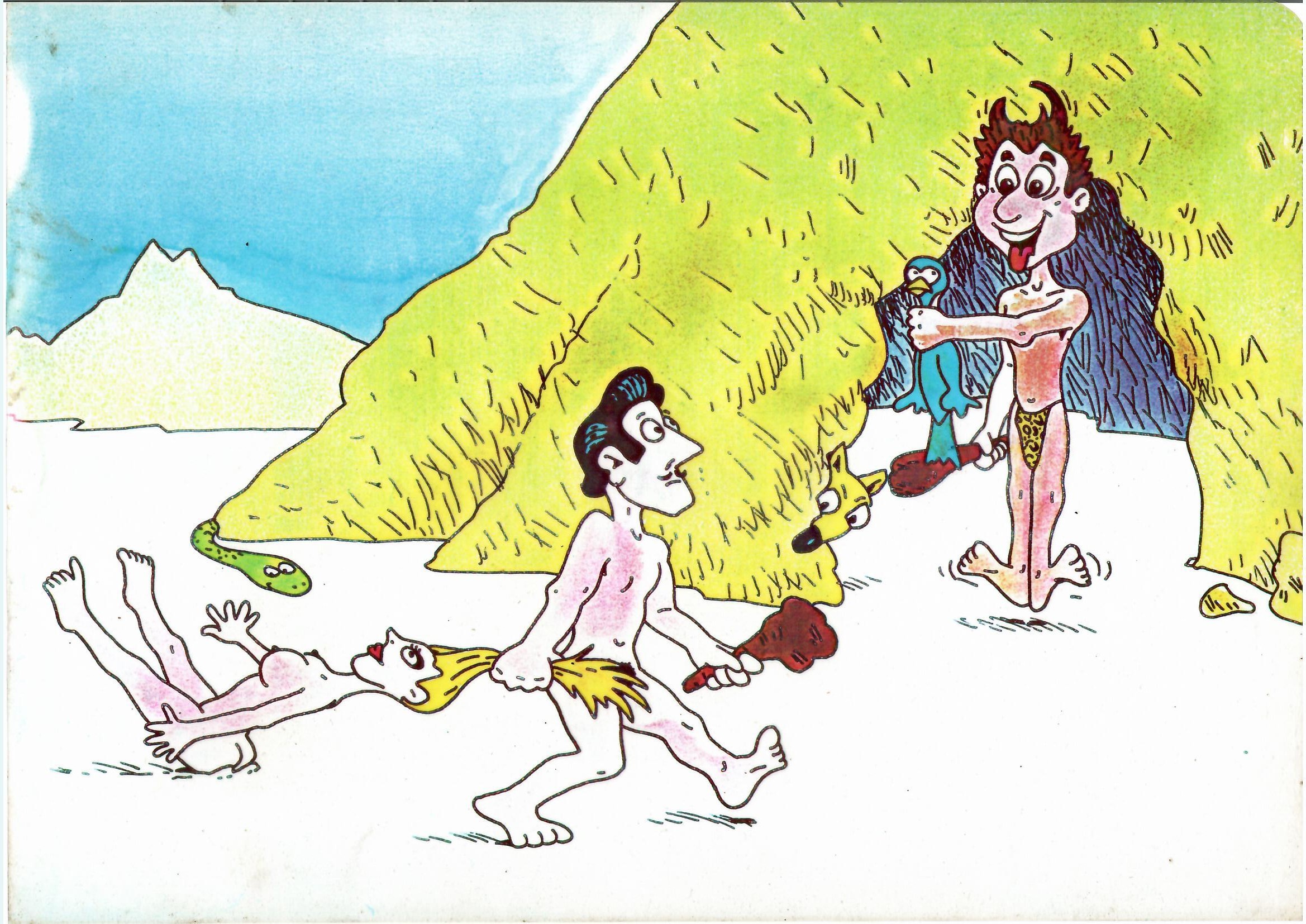
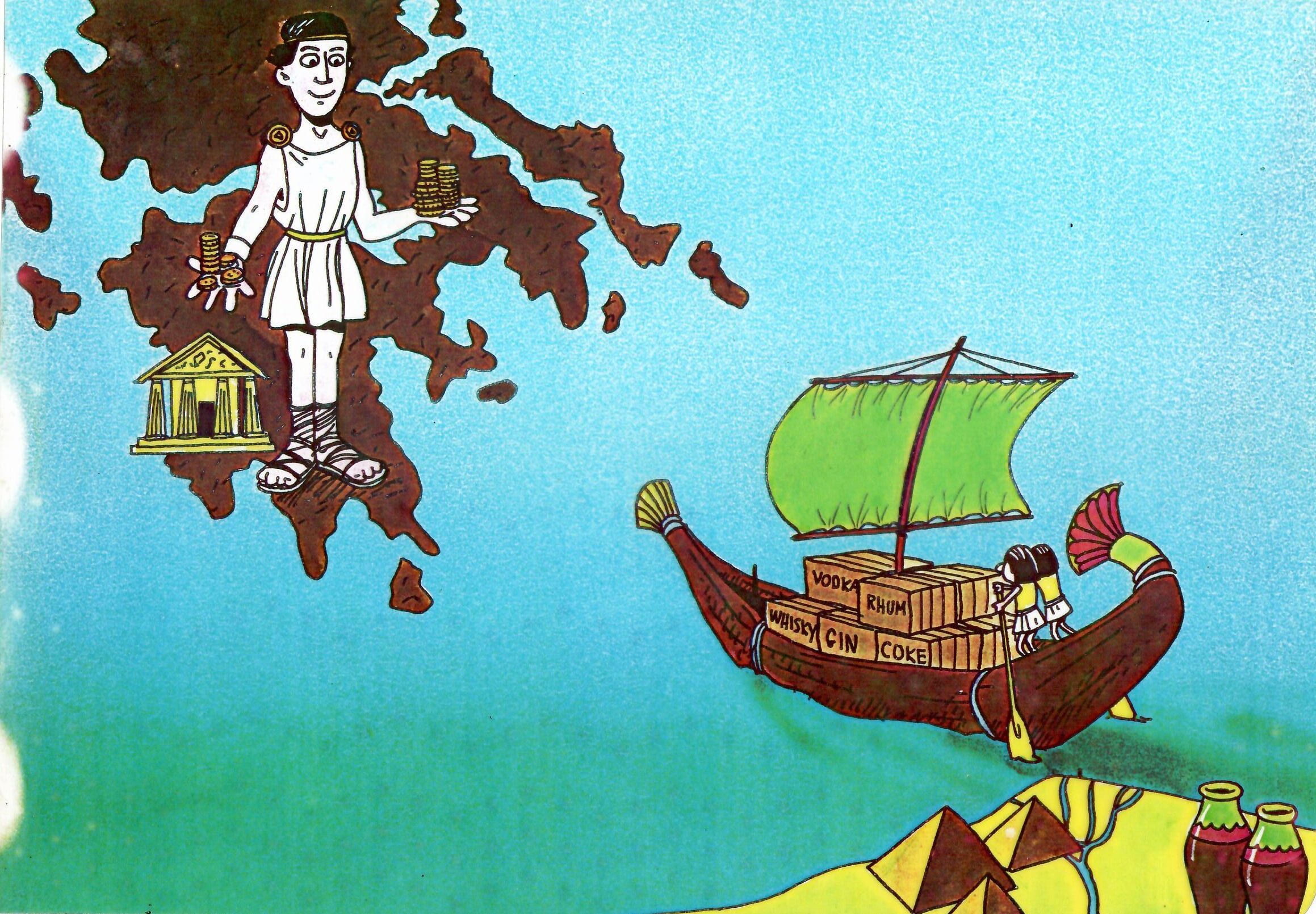
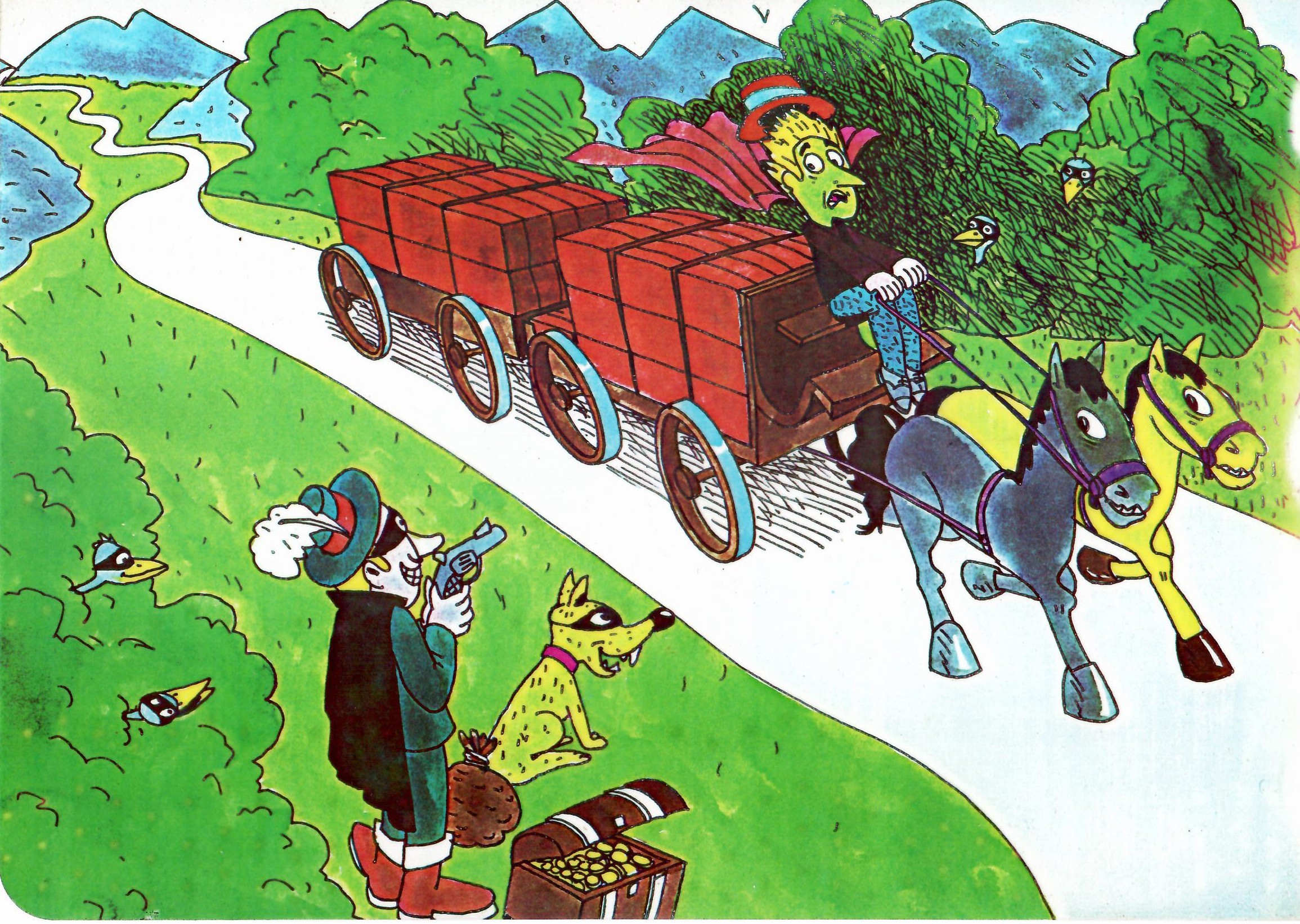
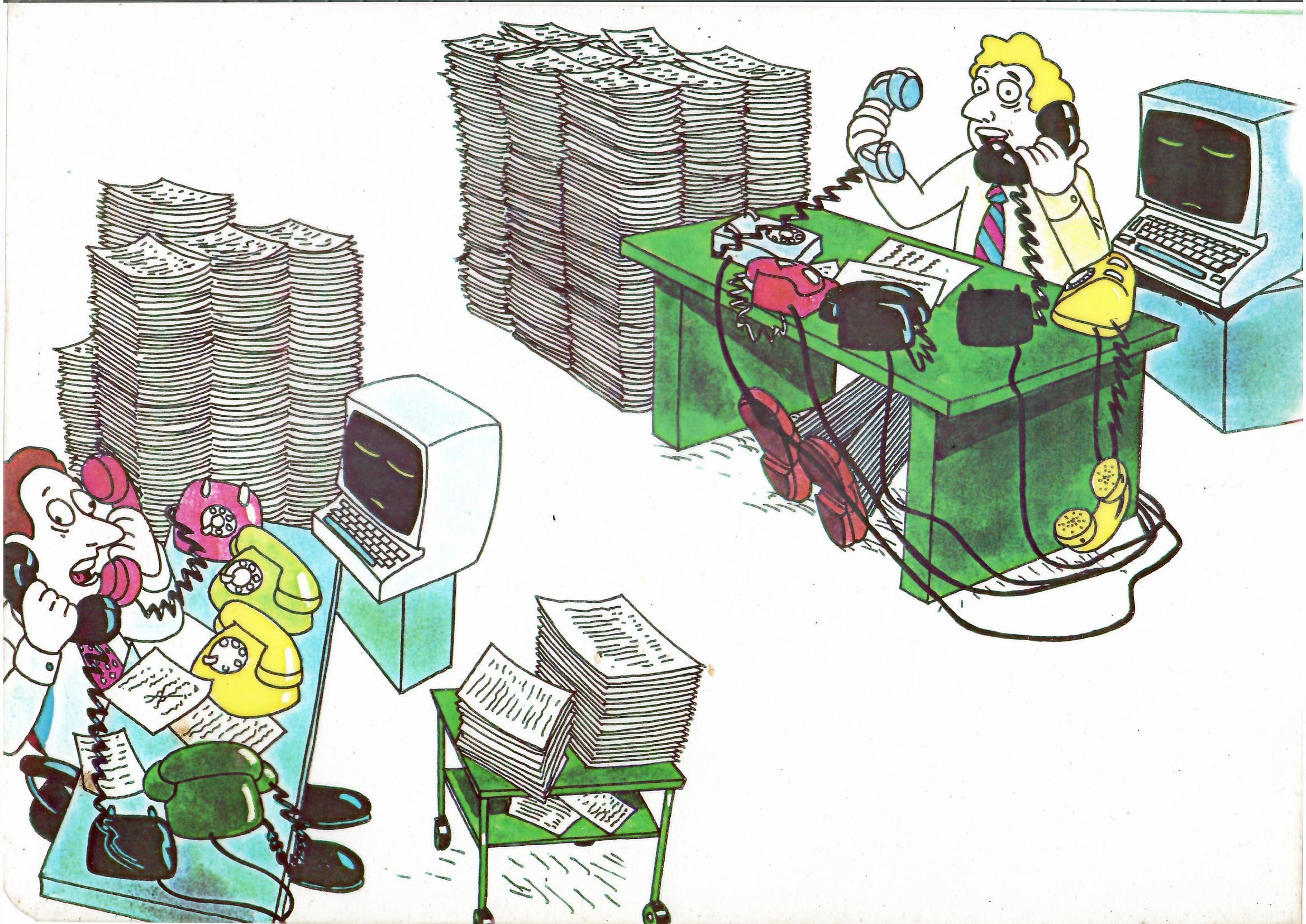
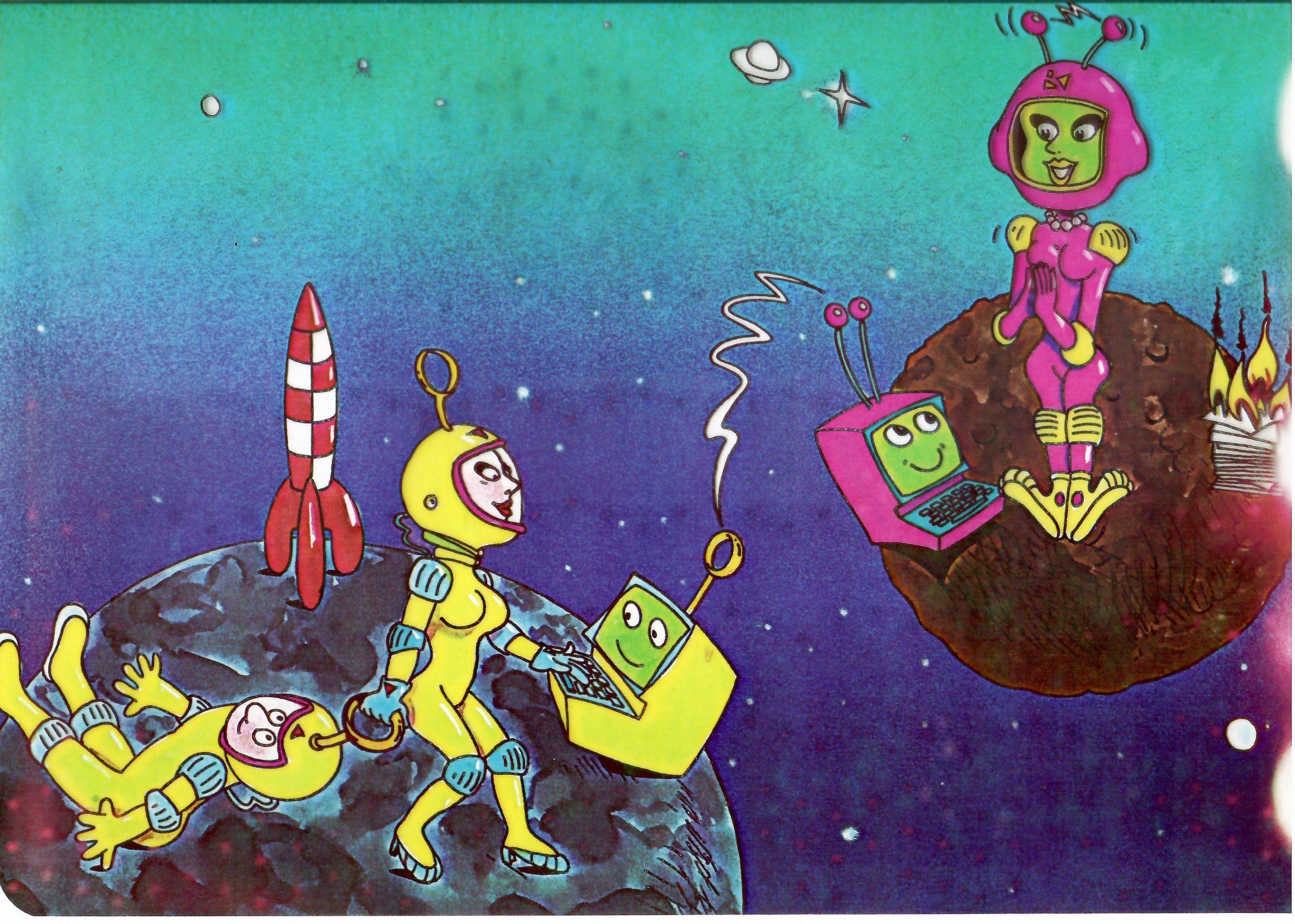
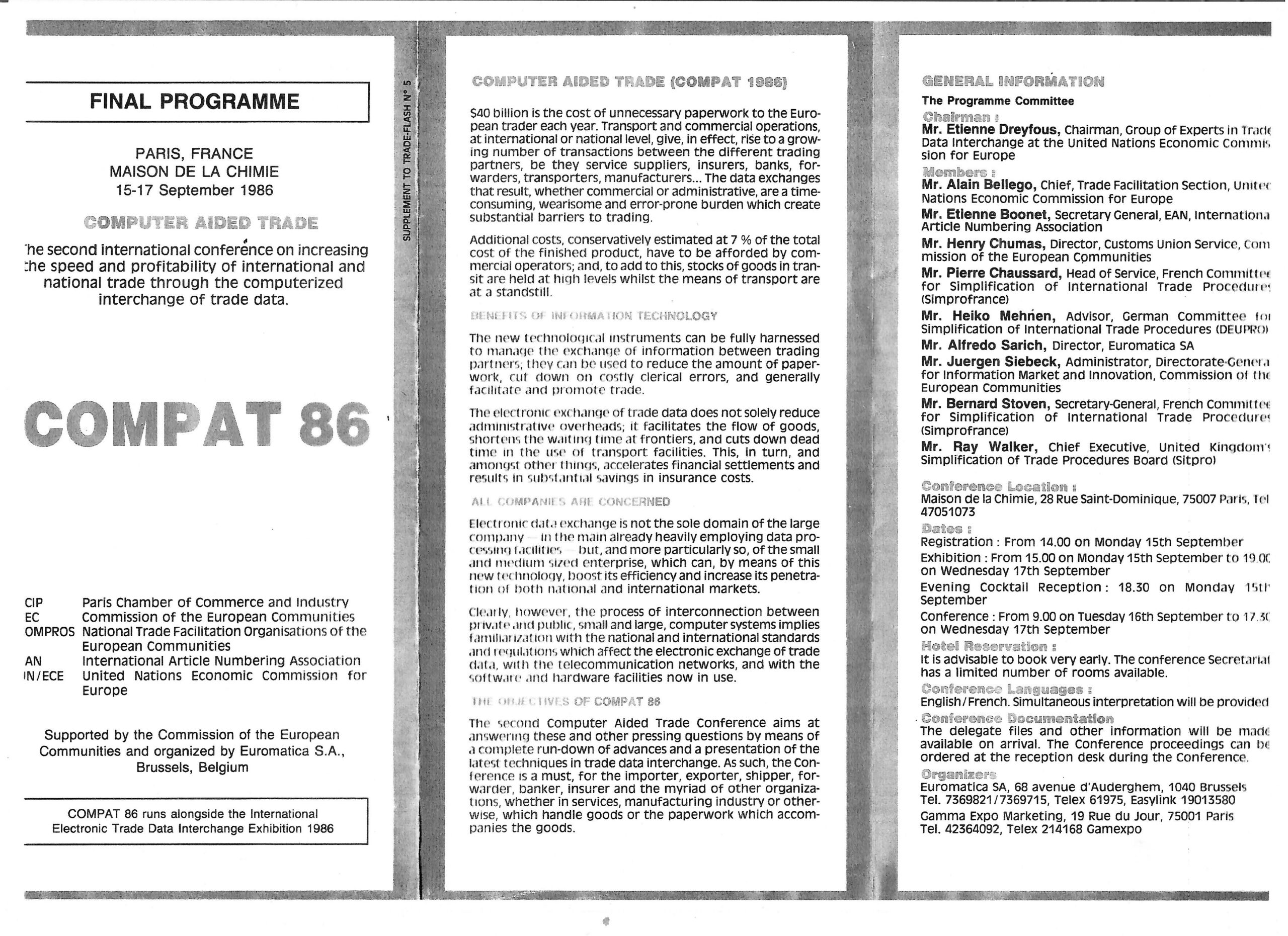
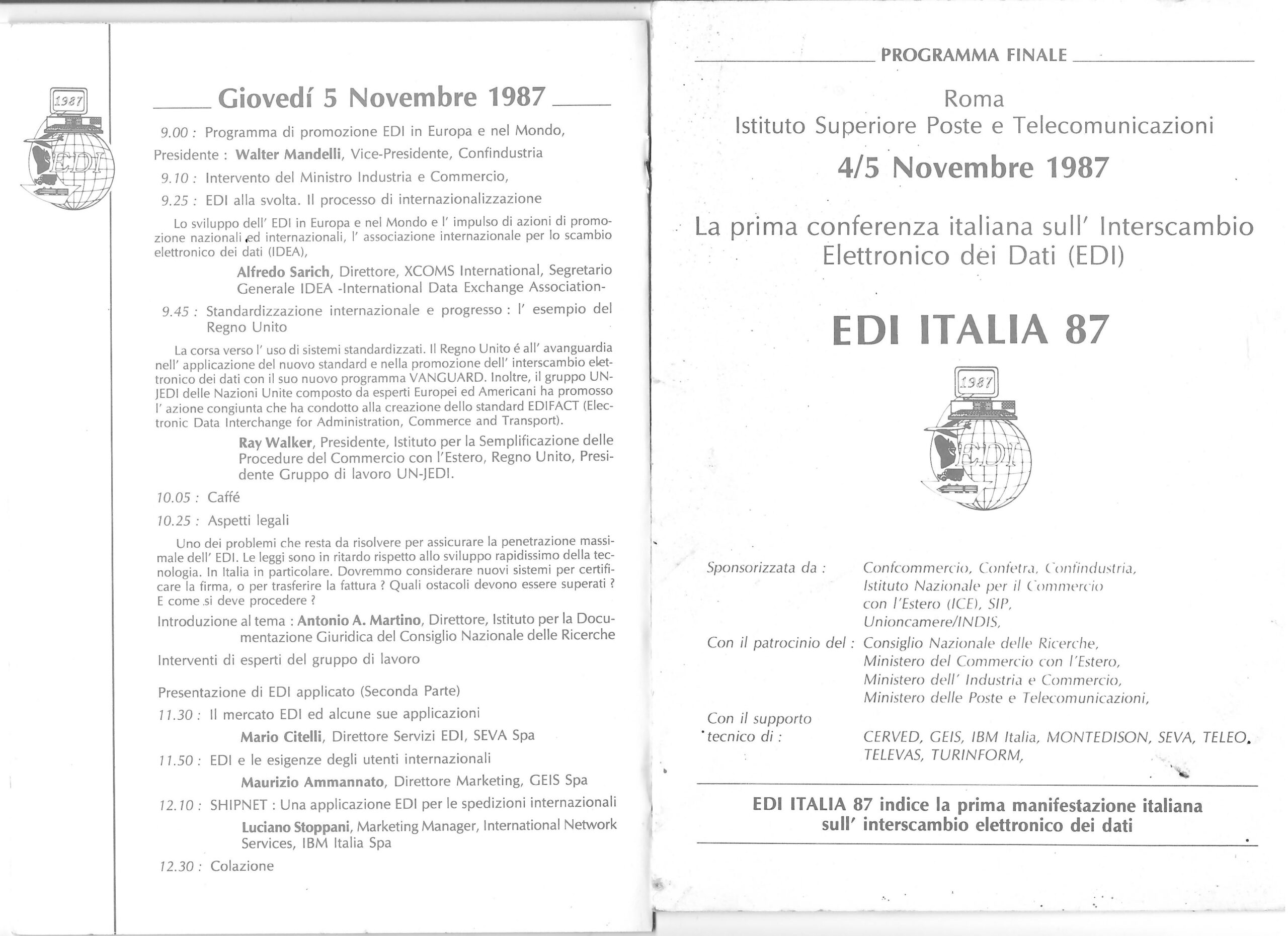
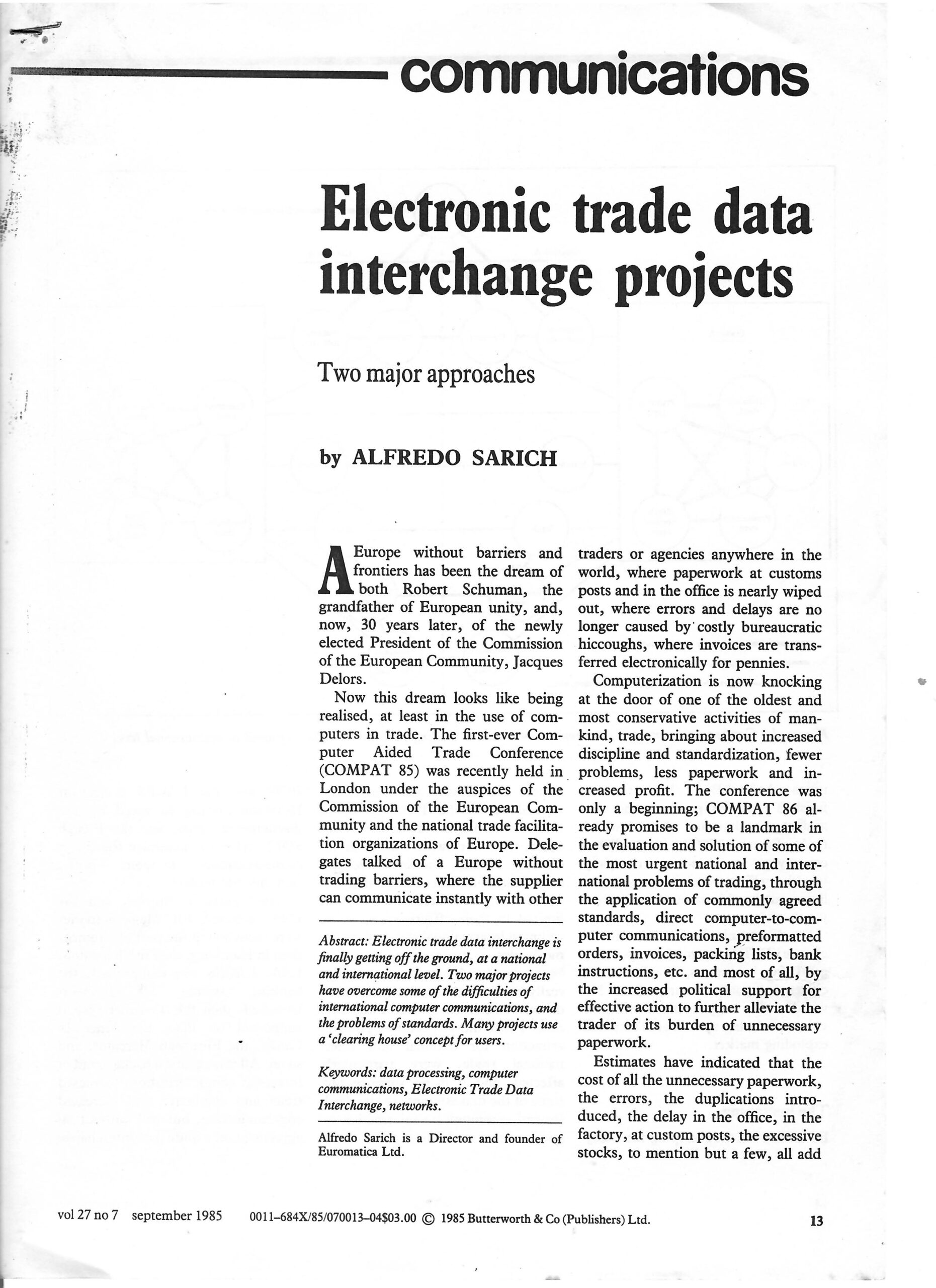
Compat 85 was the first of a series of annual international conferences of the same name held in Paris 1986 (CompatParis), The Hague 1988 and Munich 1989 (this last one under the management of Blenheim Plc UK). The Compat series of conferences were flanked by national and international events and articles to ensure the early diffusion of the Electronic commerce concept in several languages (EDITALIA87, ButterworthPublishers ).
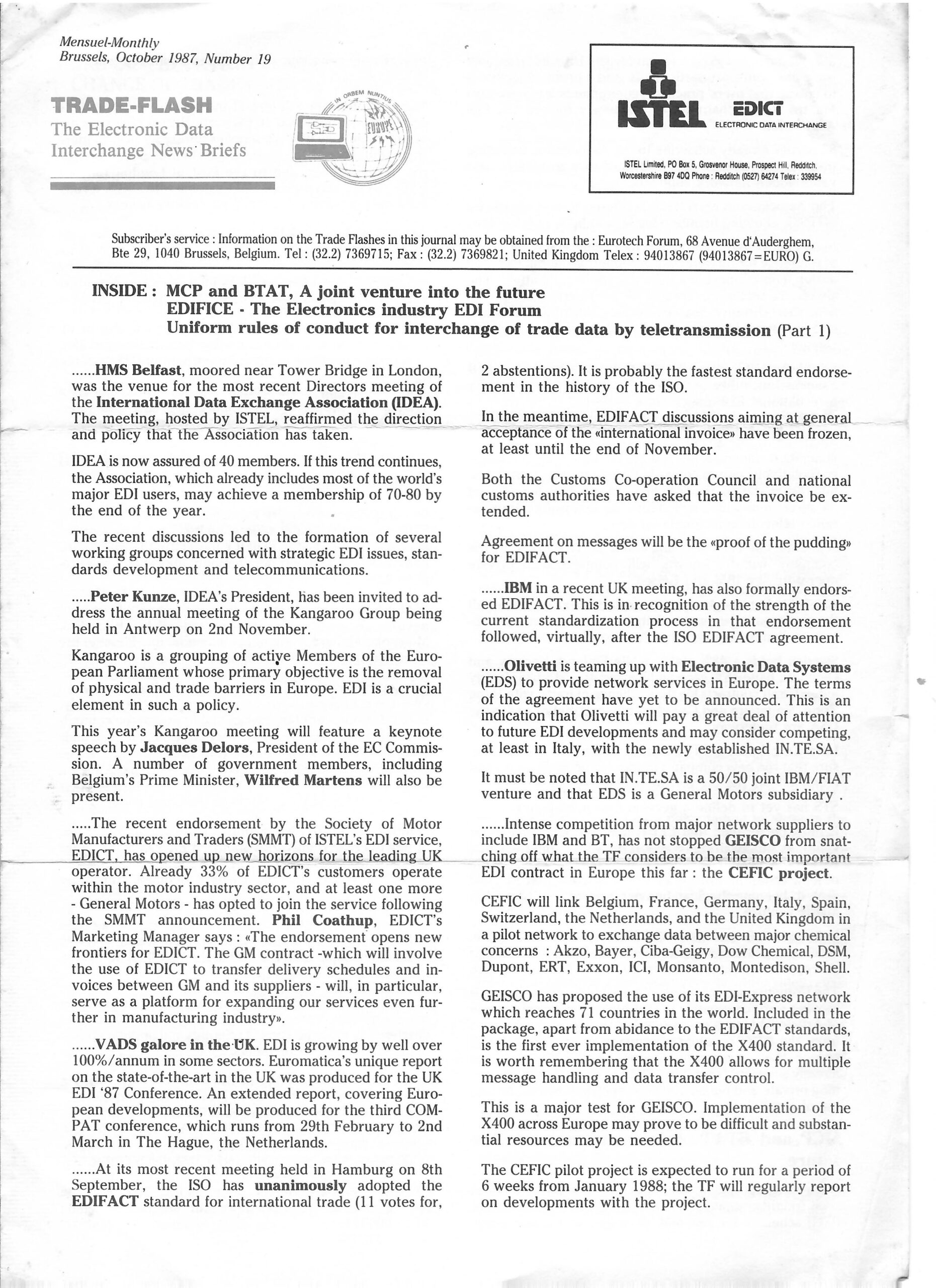
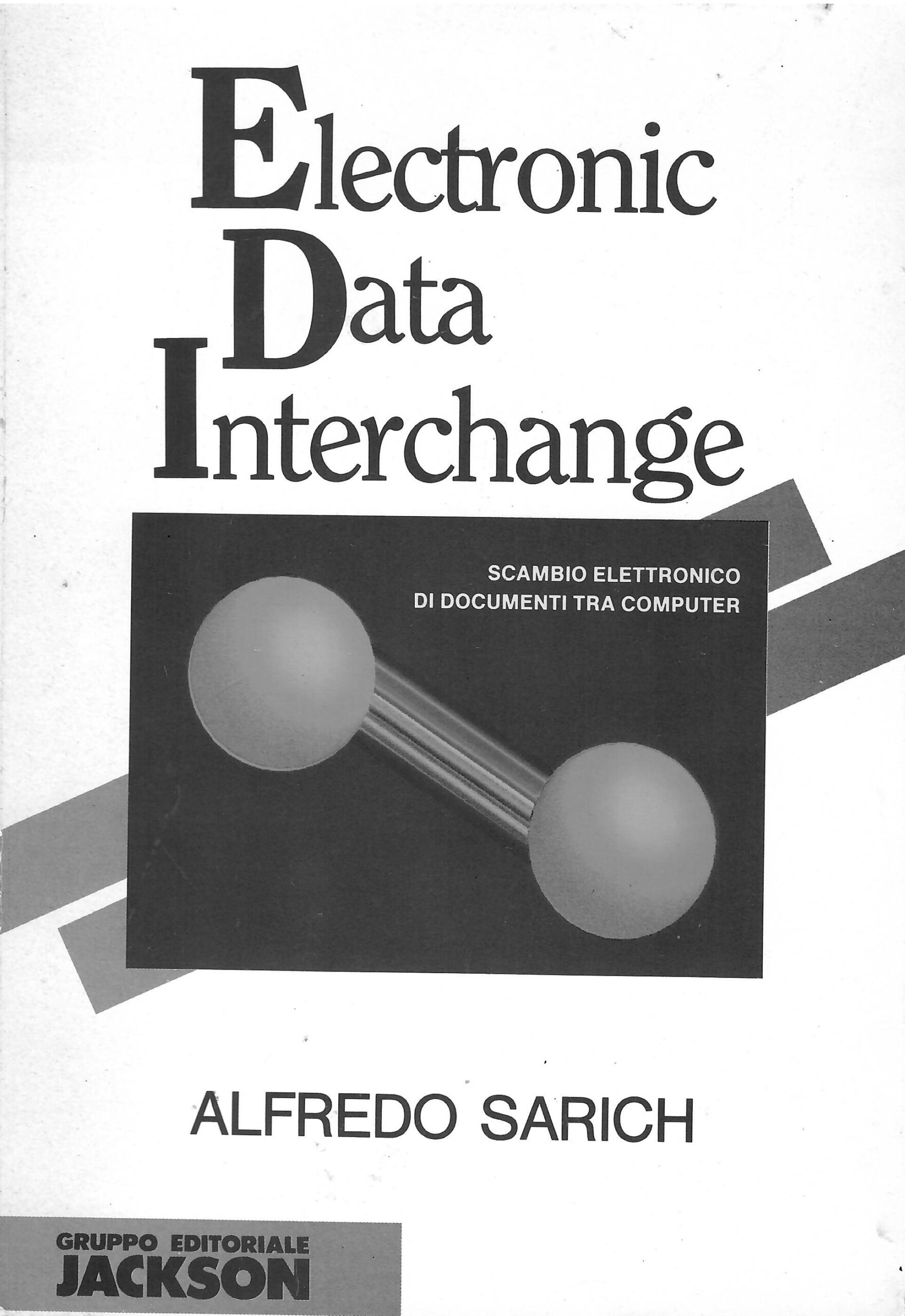
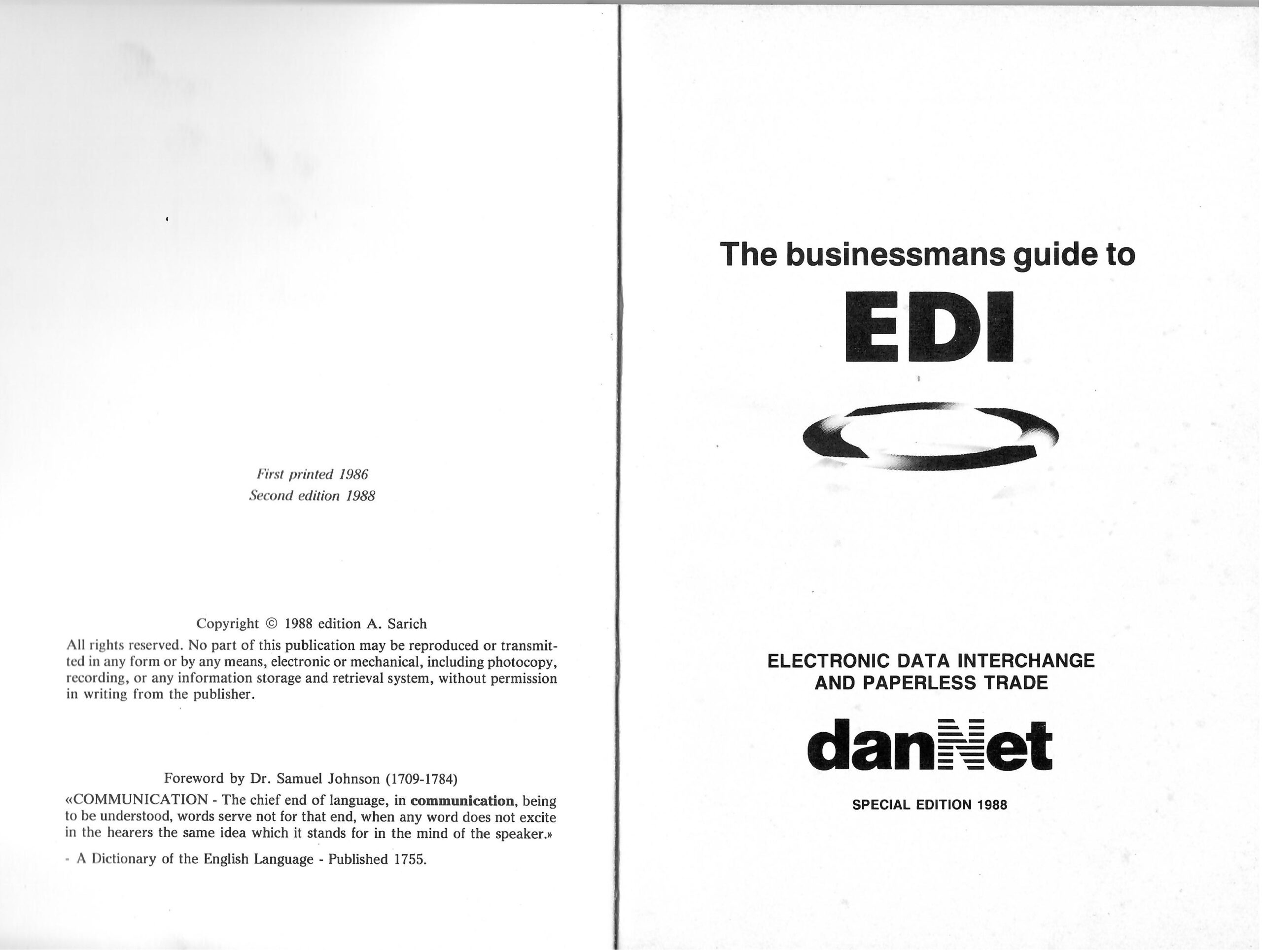
In 1986, Sarich published the TradeFlash (TradeFlash), a two-page monthly mini-news summary circulated to over two-thousands readers worldwide and the first-ever “Businessman’s Guide to Electronic Trade Data Interchange and Paperless Trade”. (EuroTech link). This breakthrough guide – and in its second version published both in English and Italian (GuideIT, GuideEN ) – was distributed worldwide. The work has been the launch-pad for international EDI and future e-commerce and it opened up the Pandora’s box to scores of follow-on specialized books and reports. Sarich lectured , in this period and beyond, hundreds of IT specialists from technology leaders in the field (IBM, Honeywell, ICL and others).
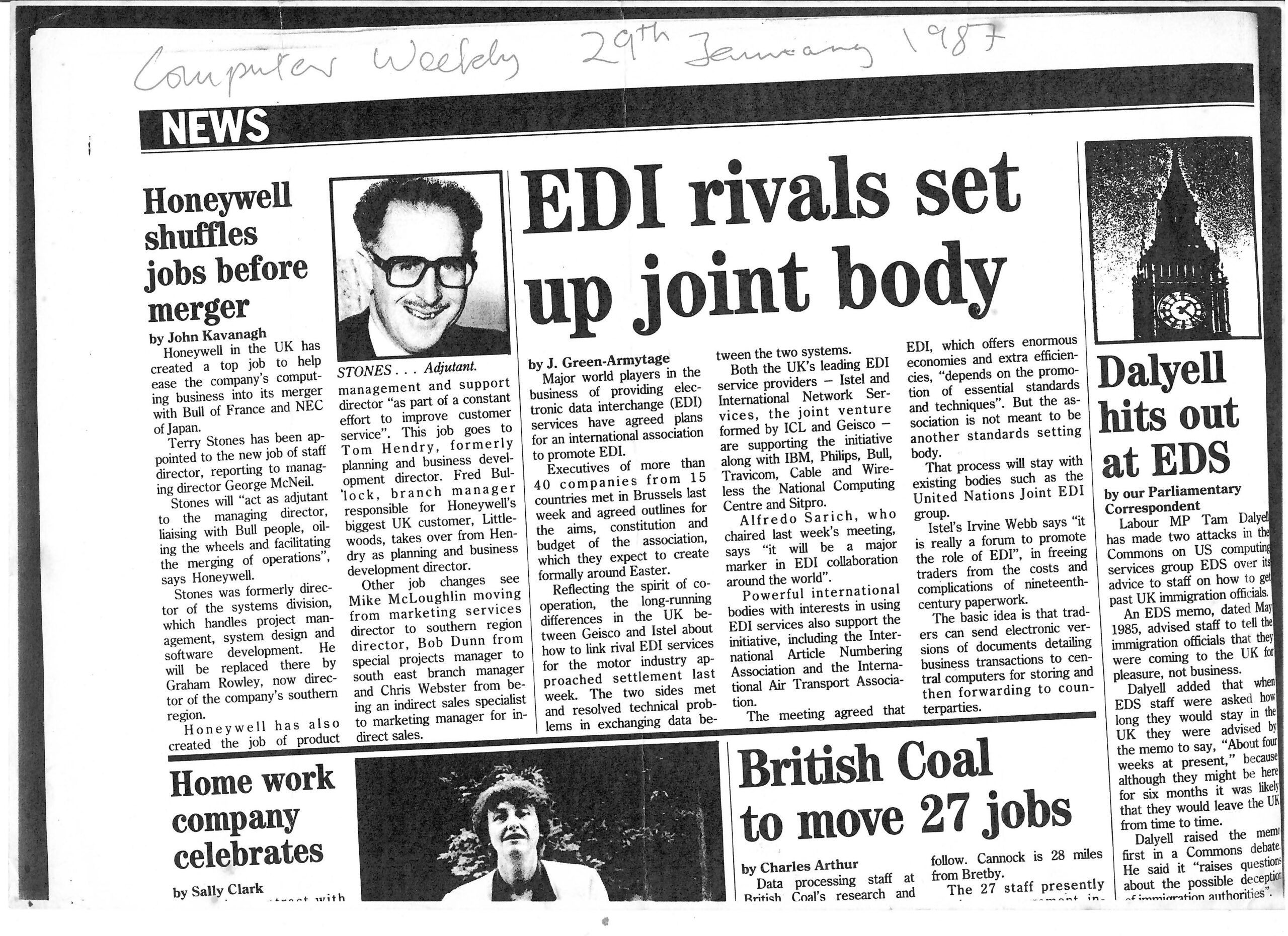
To strengthen the drive Sarich created early 1987, IDEA (International Data Exchange Association -) of which he was elected Secretary General (IDEA1). From the same date IDEA was invited by the UN/ECE to participate, as a non-governmental body, and contribute to all meetings of the emerging EDIFACT standard https://digitallibrary.un.org › record › 157778, https://unece.org/DAM/cefact/recommendations/rec07/rec07_1988_inf108.pdf).
(*) To note that the article released by Business Week in August 1985 suggests a savings of 200USD a car by 1988; the depiction within the article is a re-make of transparency EC04 (EC04).
Concurrently, the European Commission began developing a programme of financial support to progress trade data interchange internationally. Named TEDIS (Trade Electronic Data Interchange Systems), this programme launched in 1987 and was primarily used to progress EDI developments in between private and institutional actors and consortiums.
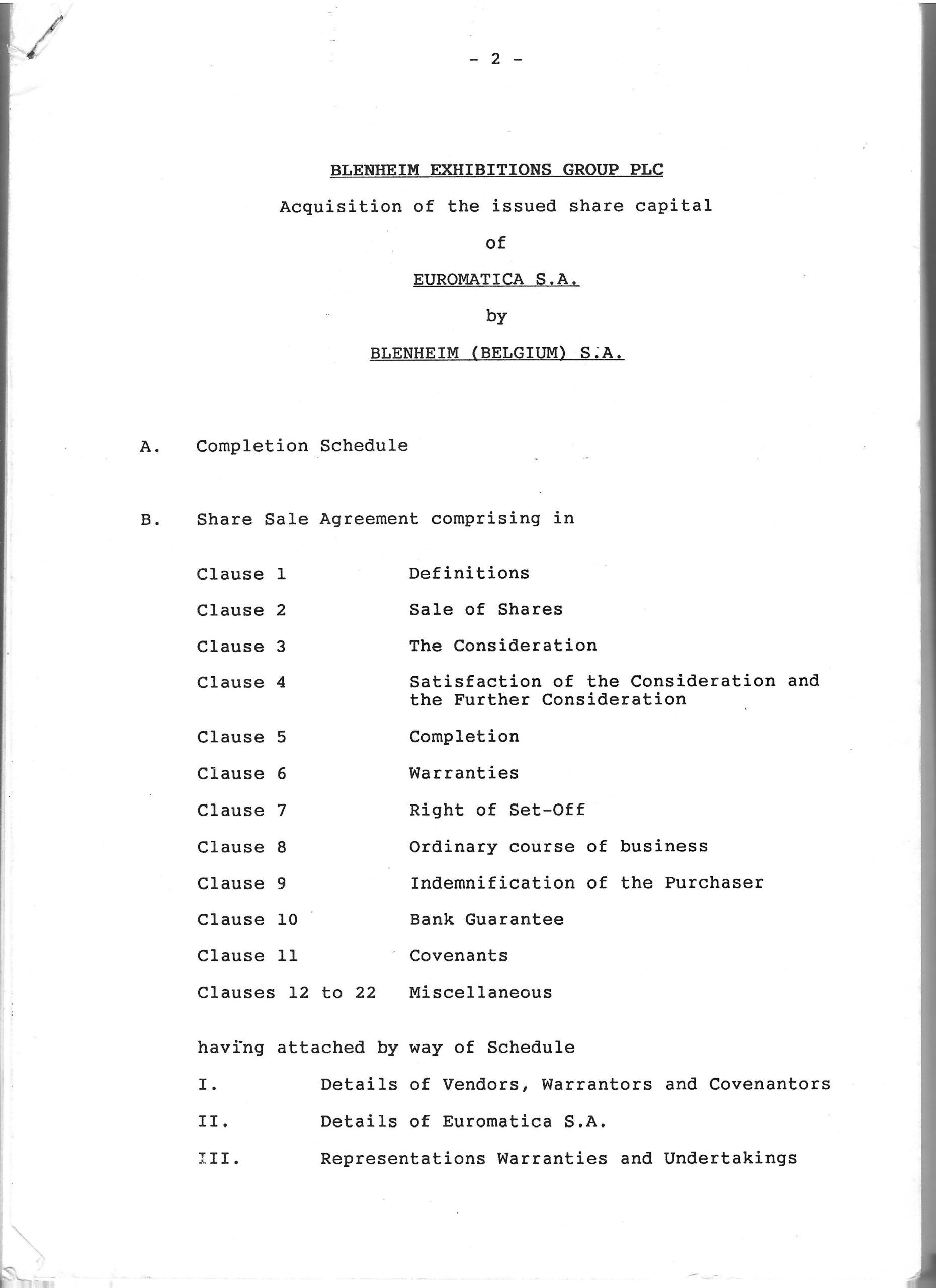
Sarich sold, in 1989, his Euromatica SA company to Blenheim Plc (United Kingdom) (Blenheim). This was the world’s first-ever known sale of an emerging electronic commerce operation to a public company. At this junction, he created a new company, XCOMS SA.
Whilst, by early 1989, EDI had moved into the administration, business and consumer domains one more step was necessary to ensure cross-fertilization and rapid penetration of electronic commerce to all levels of society. The advent of the world wide web (WWW) was the welcomed unexpected trigger that confirmed its follow-up evolution.
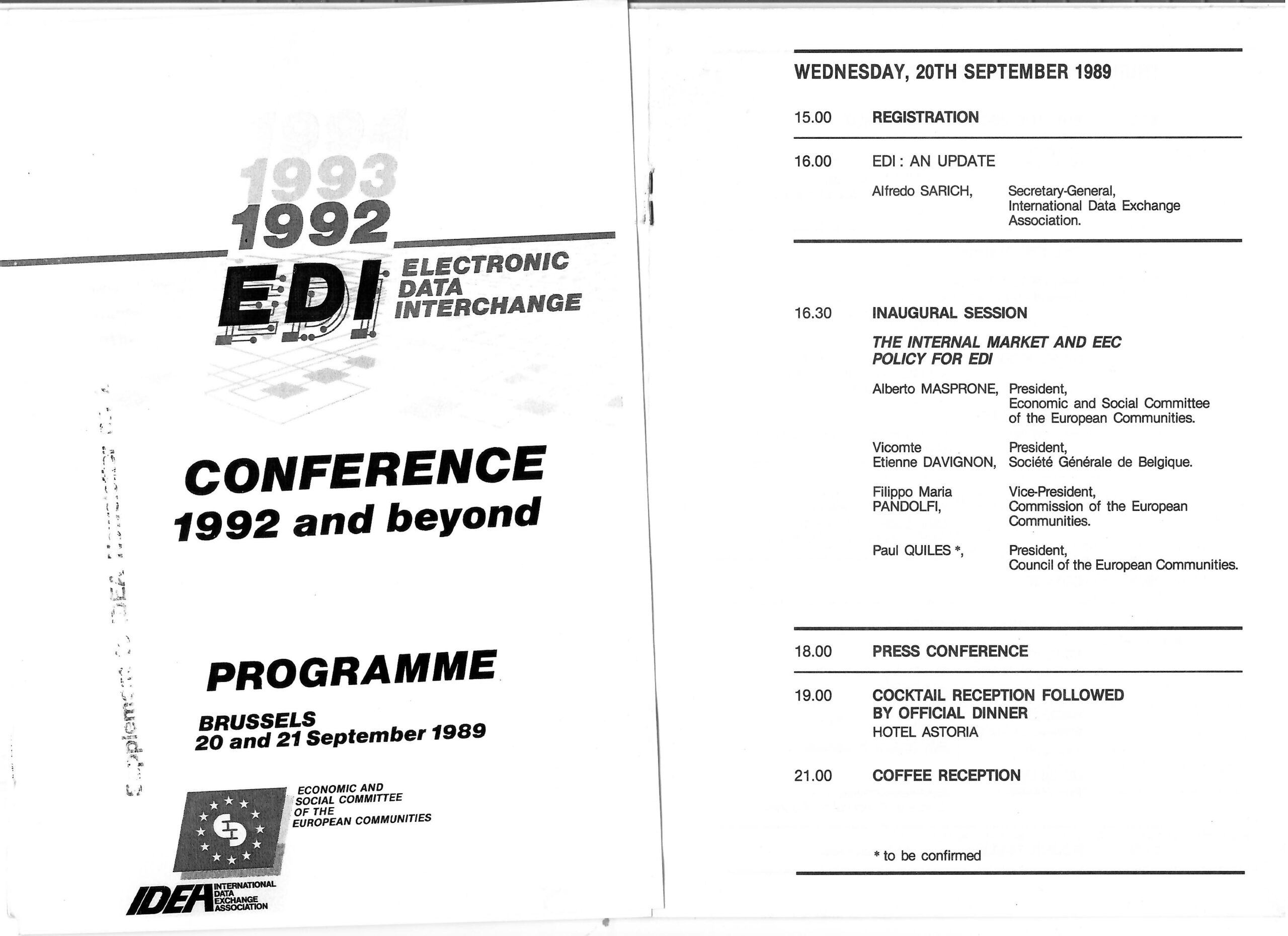
In his position as Secretary General of IDEA and then vice-President of EEMA (European Electronic Messaging Association) Sarich devoted the following years to introducing the benefits and concepts of cross-national and cross-border electronic trading exchanges to industrial and commercial actors worldwide through events and information workshops organized in cooperation with European institutions, – including the European Commission, the European Parliament, the European Economic and Social Committee (https://glgonzalezfuster.blog/history-of-data-protection-law/history-of-data-protection-1989/ EDI1992).
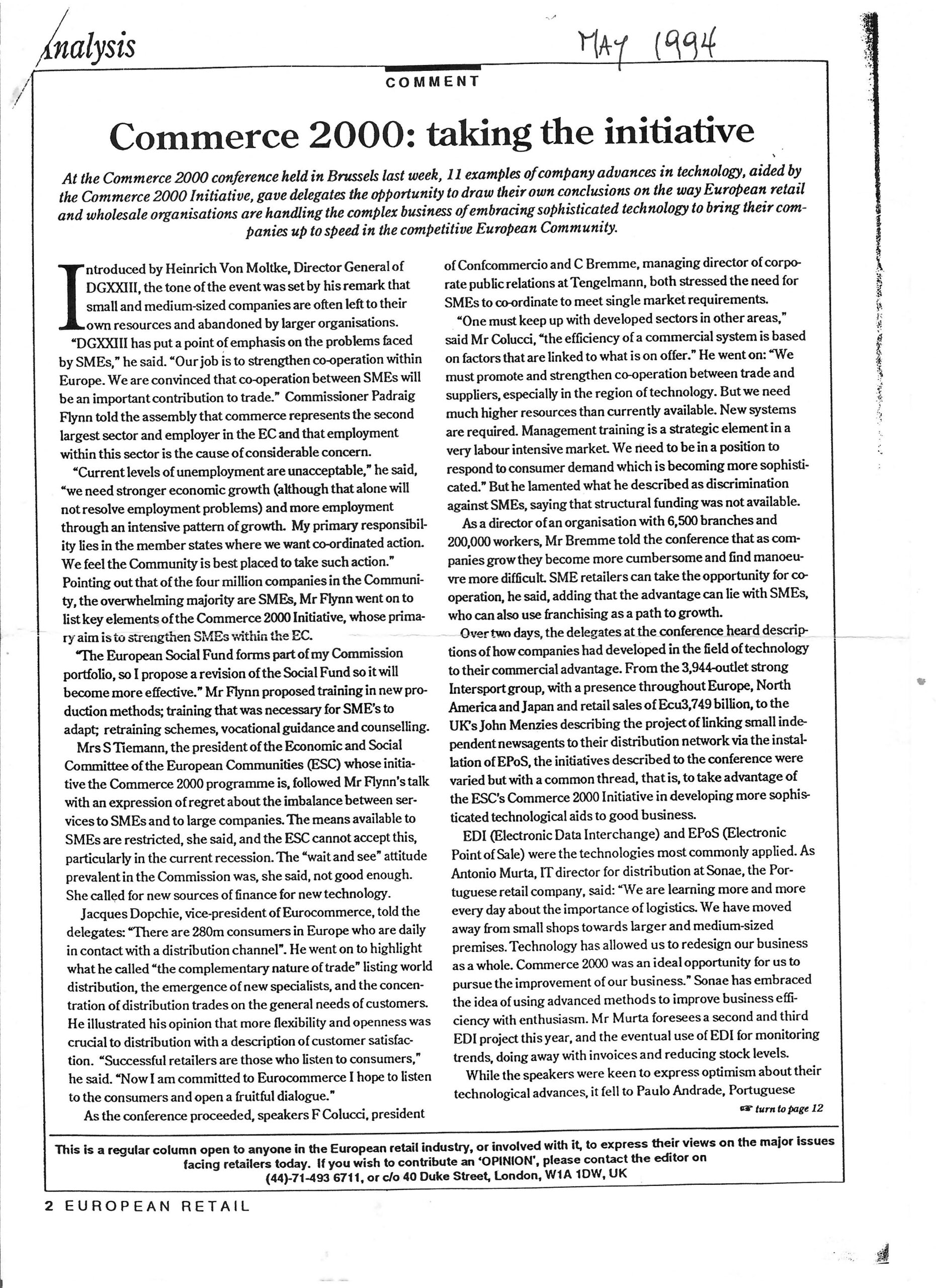
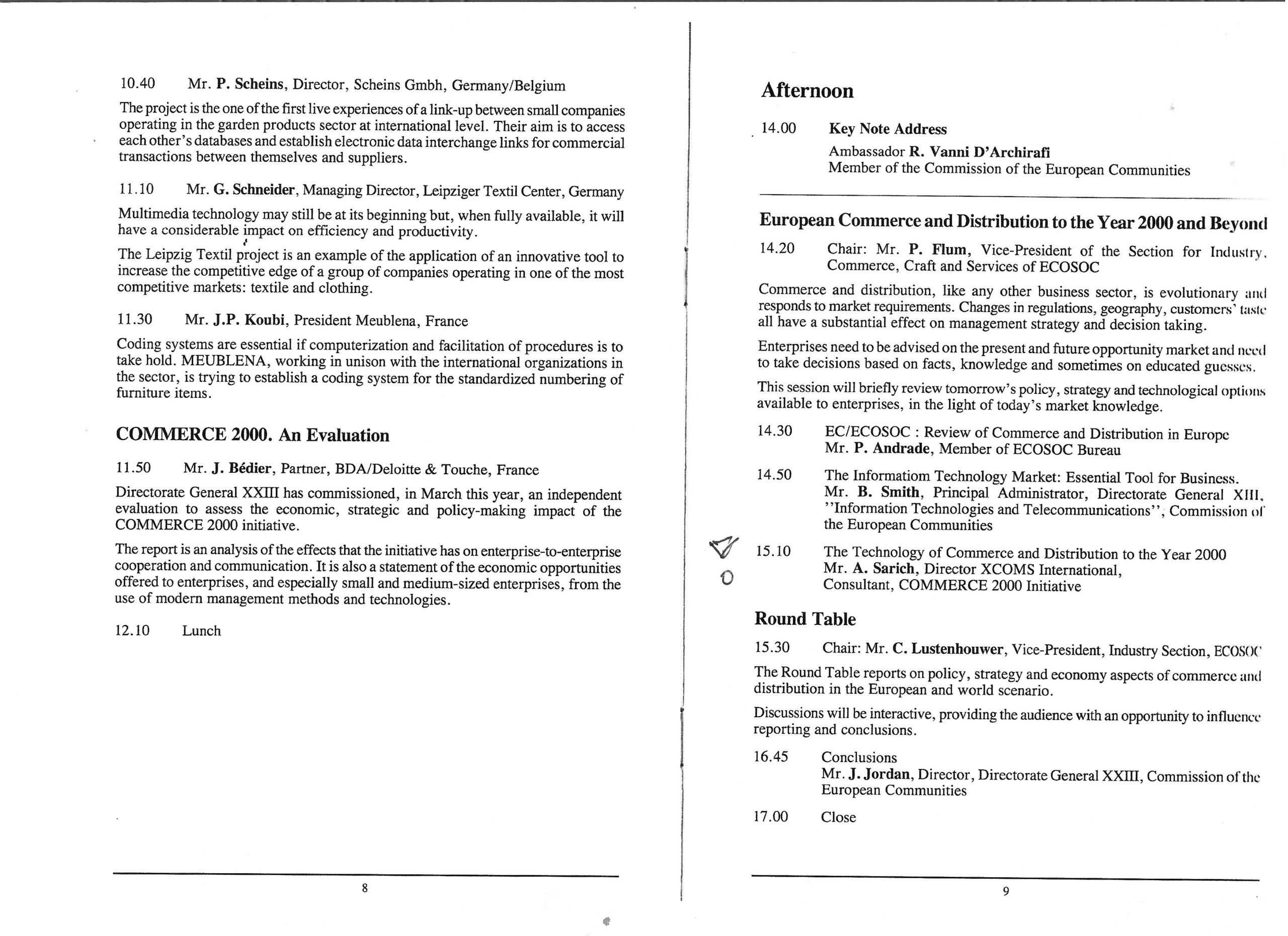
He was instrumental in the 1994 launch of the Commerce 2000 initiative anticipated through the successful implementation of a number of practical demonstrations of early e-commerce scenarios in a number of business sectors. (Comm01… Comm02). Results were also presented at the fifth international WWW Paris congress in May 1996.
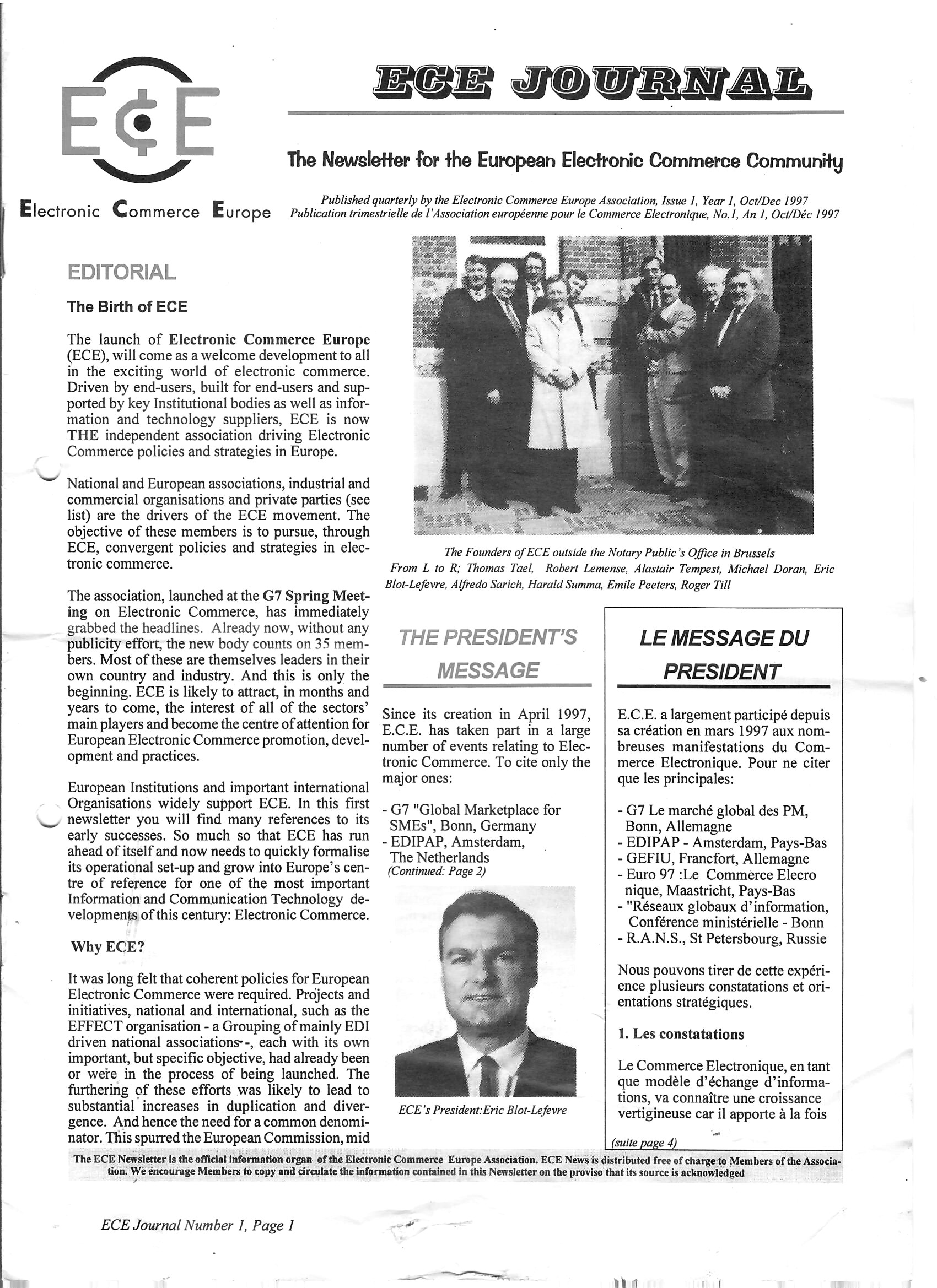
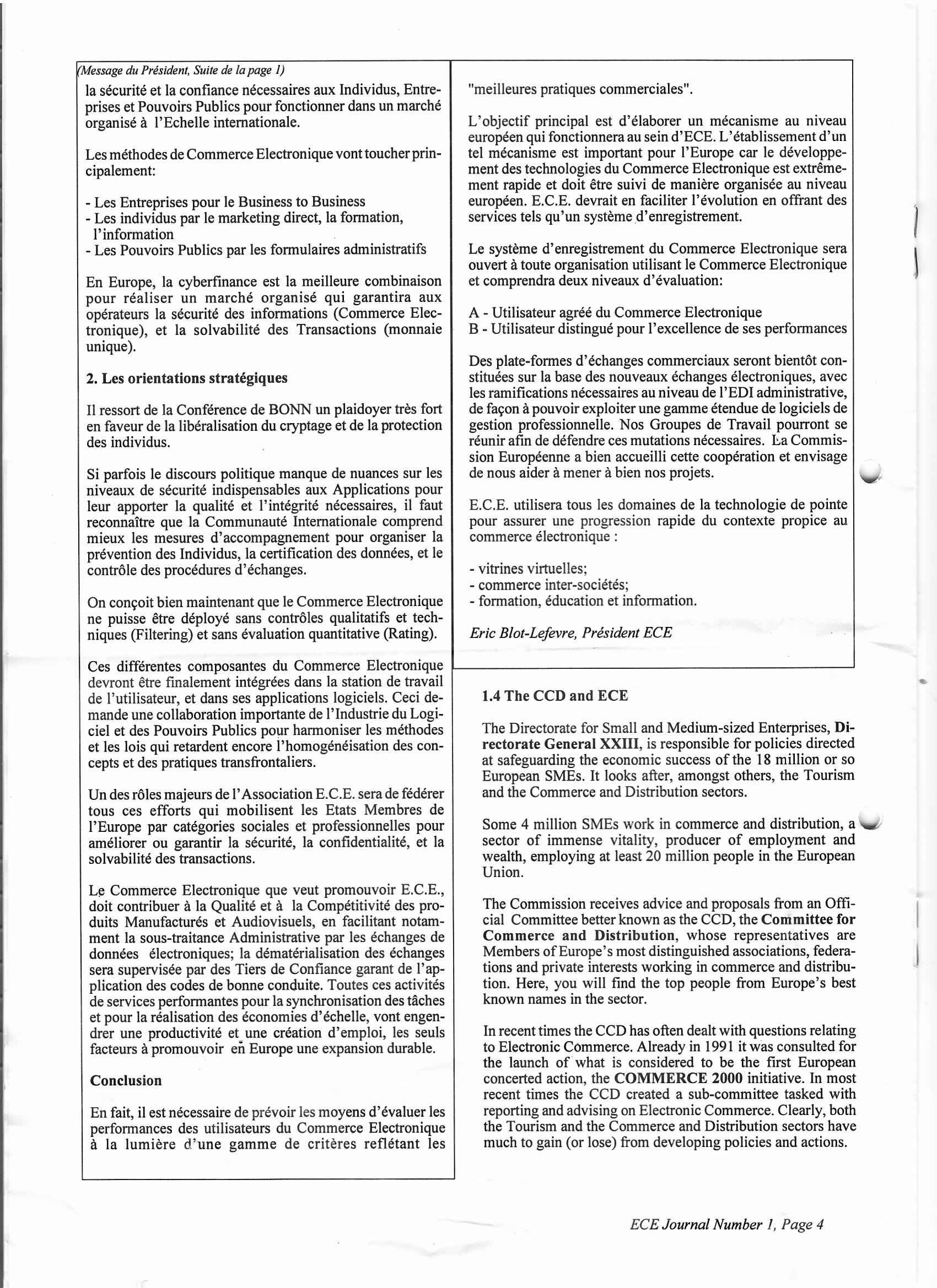
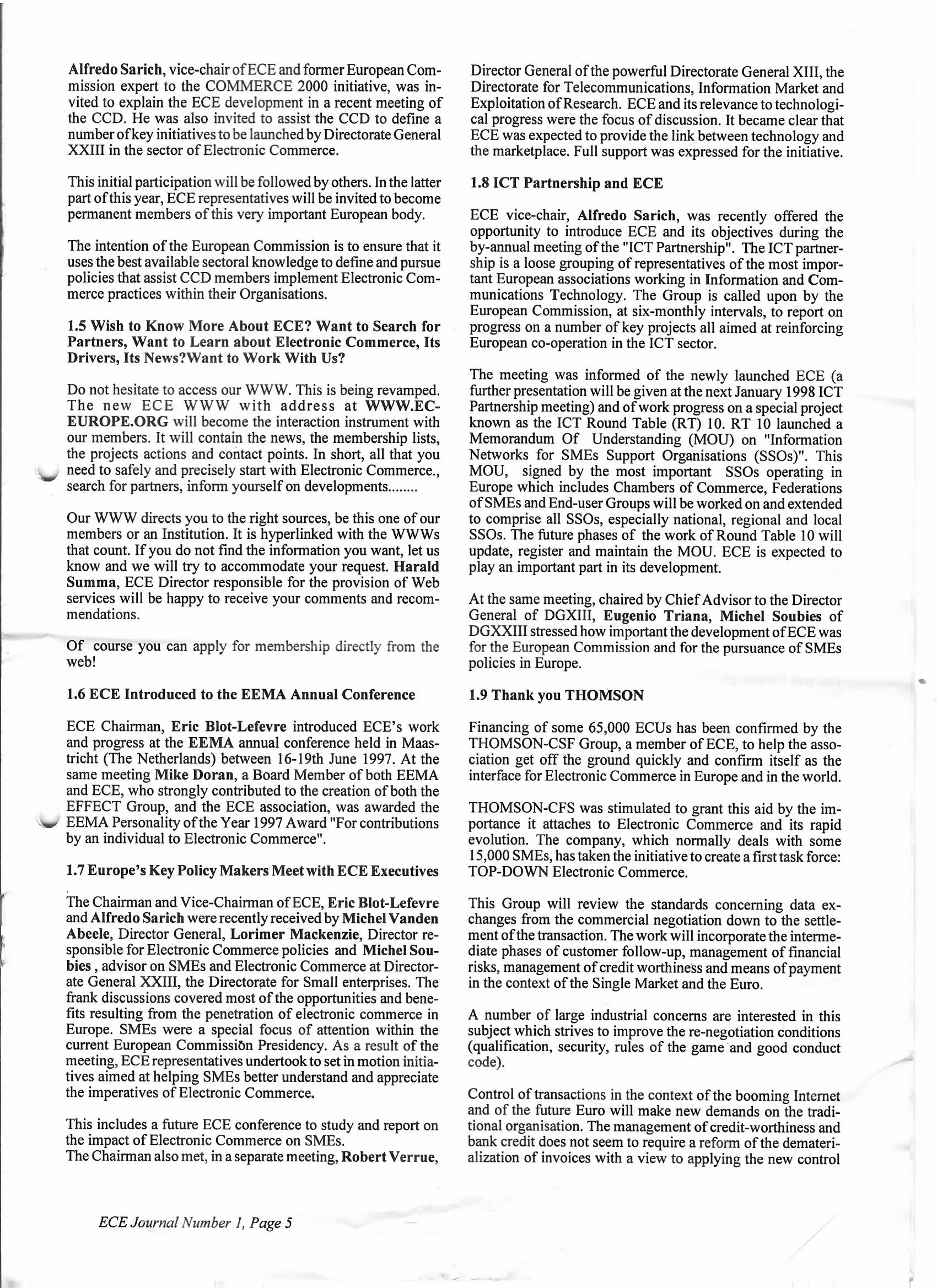
Finally, in 1997 – and much before the term became a commodity – Sarich promoted, under the auspices of the European Commission and in his position as Chairman of the SSO (SMEs Support Organisazion) Forum, the creation of Brussels’ based ECE (Electronic Commerce Europe) (ECE1997(1) ECE1997(2) ECE 1997(3)) of which he was elected vice-President. He continued to hold, in parallel, directorship responsibilities in EEMA which had merged with IDEA back in 1992.
IDEA, ECE and EEMA received membership from most of the known software and communication vendors, trade bodies and national and international organisations involved in the early development of Electronic Commerce worldwide.
EDI and Blockchain Technology now advance in parallel (https://www.techcentral.ie/vision-blockchain-presented-dublin/… https://www.ibm.com/think/topics/blockchain-vs-edi ) whilst Swift, a former member of IDEA and ECE parallels Bitcoin for dominance in the financial electronic exchange sectors (https://www.bitpace.com › blog › bitcoin-vs-swift-which-is-a-better-option-for-your-business ).